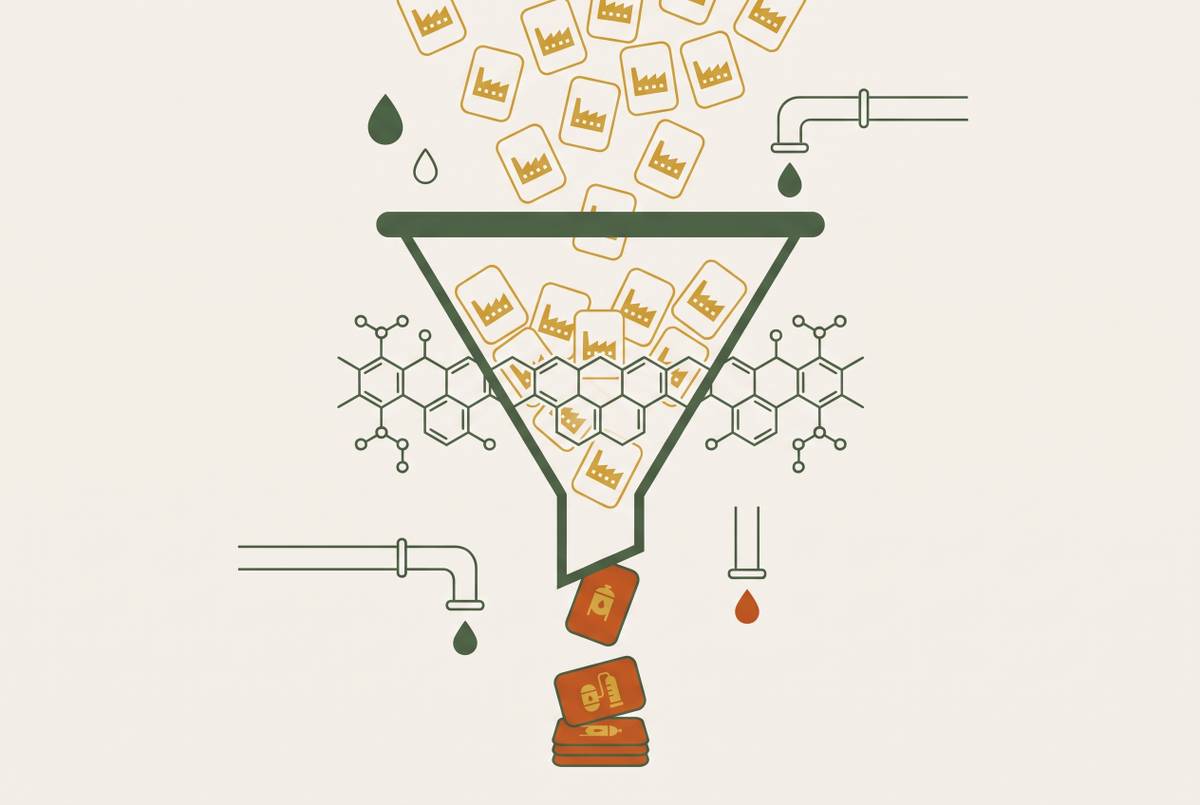
Cutting Dead-End Plant Calls by Reading Process Chemistry Instead of Guessing at Purchase Intent
Process chemistry shows which plants can buy; operational events show when.
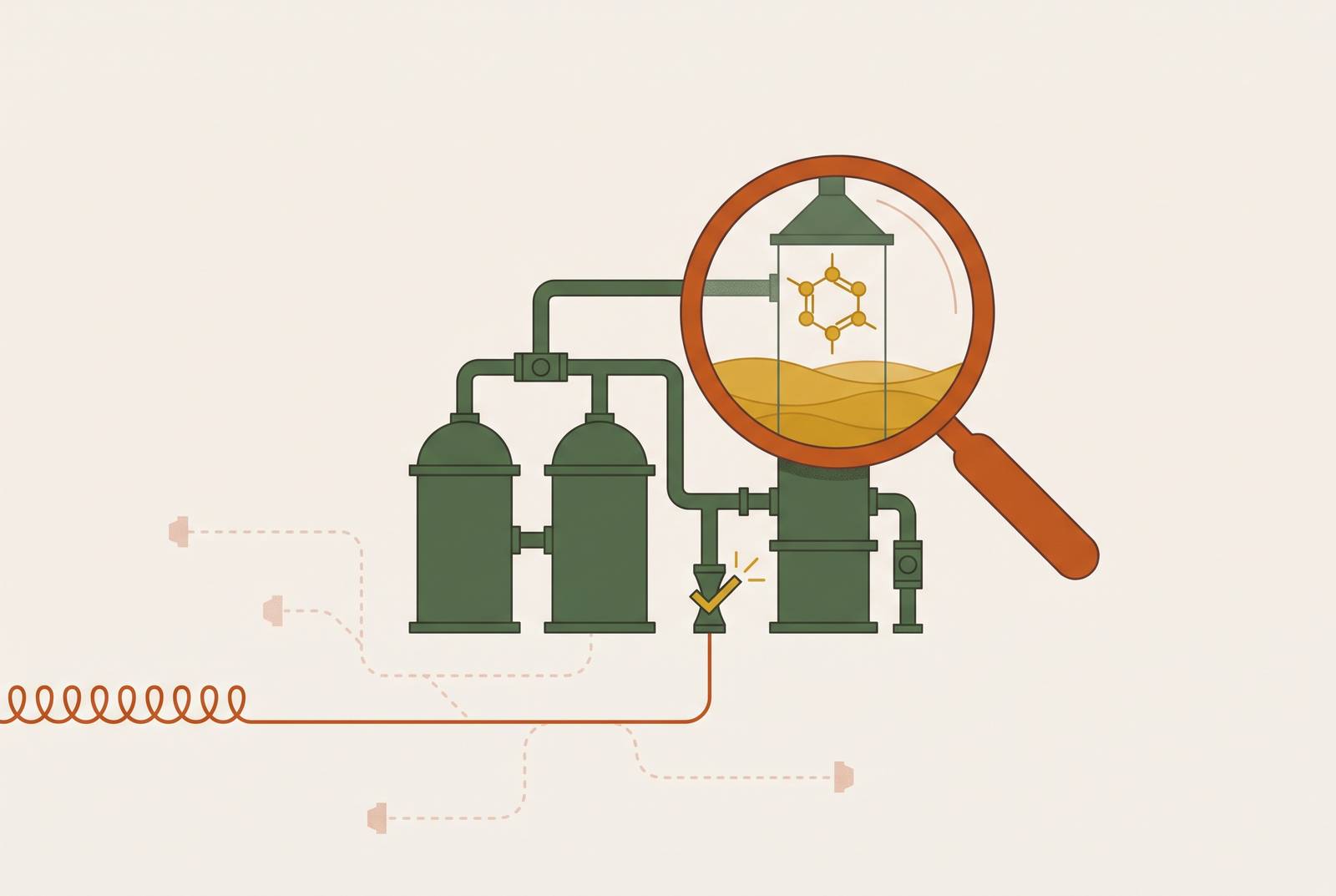
Real-time plant activity signals for industrial sales outreach timing are operational events, including permit filings, feedstock changes, capacity expansions, and hiring tied to production needs. These events can show when a plant might make a decision, but process chemistry decides whether it can use what the supplier sells. Cutting dead-end plant calls therefore requires two filters before contact, namely what the facility can use and what has changed to make a conversation timely.
Why manufacturing reps waste time on calls that were never going to close
A rep reaches a plant manager, explains the product, and discovers that the facility runs a process the product cannot serve. The contact was right, but the qualification was wrong. More persistence cannot resolve that mismatch, and a fuller pipeline only conceals it if the other accounts were selected on the same basis.
The buying committee makes that error expensive to correct. A plant manager, operations VP, procurement team, and sometimes CFO may participate in the purchase, while their research happens through peer calls, trade shows, direct requests for OEM spec sheets, and proposals from familiar vendors. Those activities do not produce the content-consumption signals a rep may have been trained to follow. Meanwhile, enterprise manufacturing deals often take many months, and strategic purchases take longer. An unsuitable account therefore consumes more than calling time, because it occupies a place in a slow-moving pipeline that could have gone to a facility with a plausible need.
Why intent data built for software buyers fails in process manufacturing
Topic-based intent platforms track which articles people read, which whitepapers they download, and what they search for across B2B publisher networks. That model works for software buyers who use those channels to research what to buy. Process-industry buying follows a different path. A VP of Operations evaluating a process chemical through peers and existing suppliers may generate no corresponding publisher-network signal, even while a consequential purchase is under consideration.
WhiteWhale’s 2026 guide identifies three structural reasons for this mismatch. Manufacturing buyers research through peer calls and trade events rather than publisher content, while long, multistakeholder buying cycles make account-level topic flags too blunt. Manufacturing niches are also too specific for generic topic taxonomies. A broad indication of interest cannot establish which facility has a need or whether its process can accept the proposed chemistry.
More online research may make some activity visible, but a resin change, permit filing, or capacity expansion is still the operational event that creates the purchase requirement. Reading about a topic does not establish that requirement. If the signal type is wrong, changing the tool that reads it cannot establish whether a facility needs the proposed chemistry or can use it.
What actually determines whether a plant will buy a given product
A plant’s process chemistry defines what it can buy, what it cannot buy, and the conditions under which it could switch. This is a physical constraint. Feedstocks, equipment, utilities, permits, and production chemistry belong to a particular facility, so that facility is the correct unit of qualification. A parent company’s industry classification does not tell the rep those things.
Consider a specialty coatings additive proposed to a plant running a specific resin. The additive must be compatible with that resin and the process in which it is used. Interest in better performance cannot overcome incompatible chemistry, and a strong relationship cannot make an unsuitable formulation usable. Conversely, a compatible process establishes a real purchase possibility, although it does not by itself establish that the plant is ready to change suppliers.
The plant manager already knows whether the category has a role in production and needs to establish whether the supplier understands the relevant constraints. NAICS codes and headcount bands cannot provide that understanding. Two plants under the same parent and industry code can have different chemistry profiles, leaving one suitable for a product that the other cannot use. Qualification must show which of those plants can use the product before the sales conversation begins.
How to read a plant's chemistry from observable sources before making contact
Environmental and operating permits document what a facility processes, the emissions it produces, and the treatment systems it runs. Equipment records show more about the production process, while job postings show what skills the plant needs. A posting for a process chemist with PET experience points toward a specific chemistry. A maintenance-engineer role that calls for boiler water treatment experience gives a different clue about what the plant runs and which product portfolio might fit.
These sources help the rep understand the plant when read together before a call. A permit supplies process context, an equipment record helps describe what the plant runs, and a production signal shows what the facility makes. PlantScaler’s facility-process classification framework adds details about the process to industry codes to help show what the plant makes. The purpose is not to accumulate company facts, but to identify a plausible connection between a product and a production step.
This is a recurring pre-call discipline. Permits, equipment records, hiring, and production information are observable sources that do not require proprietary intent data to become useful. Structured platforms can make the reading faster, but the practical output remains specific. Before dialing, the rep can name the process, identify a potentially relevant product category, and explain the operational context that warrants a conversation. That preparation also exposes gaps that a parent-company profile would leave invisible.
How can a rep know when a manufacturing facility is actively evaluating new equipment or suppliers?
Operational triggers can show when a plant might review suppliers, but they do not prove that it is choosing one. Chemistry fit establishes which plants could buy. A dated change in materials, permits, investment, or leadership then gives the rep a reason to approach a suitable facility now.
A transition to post-consumer recycled resins or biodegradable materials can change processing parameters and make legacy formulations unsuitable. Public material specifications or sustainability commitments can show that shift before an RFQ appears. New air or water permit filings can also point to a process change that needs new chemistry, while public rulemaking timelines help put regulatory work in context.
Multiple signals strengthen the case for contact. A new facility permit, a CapEx increase in an earnings filing, and automation-engineer hiring together provide a stronger basis than any one event alone. A new plant manager or operations VP offers another opening, because new leaders often review supplier relationships in their first months. None of these events establishes the outcome of a purchase decision, but each supplies a concrete reason to investigate the timing.
The useful distinction is between a dated fact and a probabilistic score. An opening such as “this plant filed a permit for a new coating line in September” gives the plant manager an immediately recognizable basis for the call.
Why the cross-sell and upsell case depends on the same chemistry-first logic
An existing customer can be well understood commercially and poorly understood operationally. The CRM records products sold, contacts developed, and business already won. It does not reveal what the same plant buys from another supplier for a different process step. A long relationship can therefore leave substantial gaps in the supplier’s view of the account.
Consider an account that has bought one product category for years while running three adjacent process steps that no one has addressed. The purchase history makes the account look familiar. Its full process profile reveals a broader set of possible needs, because specialty chemicals and intermediates are embedded in validated production processes. Each adjacent formulation or derivative product may create a cross-sell opportunity, but compatibility still governs whether the supplier’s portfolio belongs there.
The practical response is to map the full portfolio against the full process. This exposes products the plant is likely to need that the rep has never proposed, without treating every unused product as an opportunity. The same operational signals used in prospecting then help the rep judge when to call. A process expansion at a current customer can open a cross-sell conversation because the change may introduce requirements that the existing supply relationship does not cover.
How plant-level data infrastructure makes the chemistry-first approach repeatable at scale
Doing the research by hand gets hard when a territory has hundreds of plants. The obstacle is not the principle of chemistry-based qualification, but the work of assembling a usable facility profile before every call. A structured plant-level database gives the whole team a way to use that work. It also avoids asking a company-level CRM to answer questions that its account records were never built to answer.
PlantScaler uses this facility-first approach in plant profiles with 60+ data points, fit scoring, and trigger signals. Its framework treats plants, rather than parent companies, as the unit of record for targeting process manufacturers and chemical formulators. Information about what each site produces, the equipment it runs, and the permits it holds supports qualification at that level.
Once the supplier’s portfolio is mapped against plant chemistry profiles, fit scoring can surface product-to-process matches rather than infer purchase interest from content consumption. Trigger signals help show when to act on those matches. The resulting territory view supports prioritization by fit density and signal strength. A facility with relevant chemistry and a recent operational change has a clearer basis for attention than an account selected solely because its next scheduled call is due.
Operational context can populate the account record, giving subsequent conversations a process-specific starting point instead of leaving each rep to reconstruct the same information. The platform makes the method repeatable, while the chemistry and the underlying event remain the reasons for contact.
What changes when reps open with what a plant runs instead of what their product does
A call that begins with the plant’s feedstock, production line, or recent permit filing gives the buyer something specific to assess. The rep is no longer asking for attention on the strength of a product description alone. The opening connects an observable part of the operation to a potentially relevant chemistry. A plant manager can then evaluate whether that connection is technically useful.
For example, a rep approaching a facility transitioning to post-consumer recycled resins can open on the material change and its implications for the existing formulation. The product enters only after that operational context is clear. This changes the conversation from a recital of features to an examination of fit, where the buyer’s process is the reference point. The preparation gives technical qualification a credible starting place.
That specificity also supports margin because the proposed chemistry is positioned against an operational problem. The reverse is equally useful before dialing. If the documented chemistry rules the product out, the rep can remove the account from consideration without spending a call discovering the incompatibility.
The rep’s workday then contains fewer attempts to persuade unsuitable plants and more conversations grounded in a real production requirement.