Enriching Salesforce with Manufacturing Facility Data
Plant-level data reveals what actually happens inside facilities that corporate records never will.
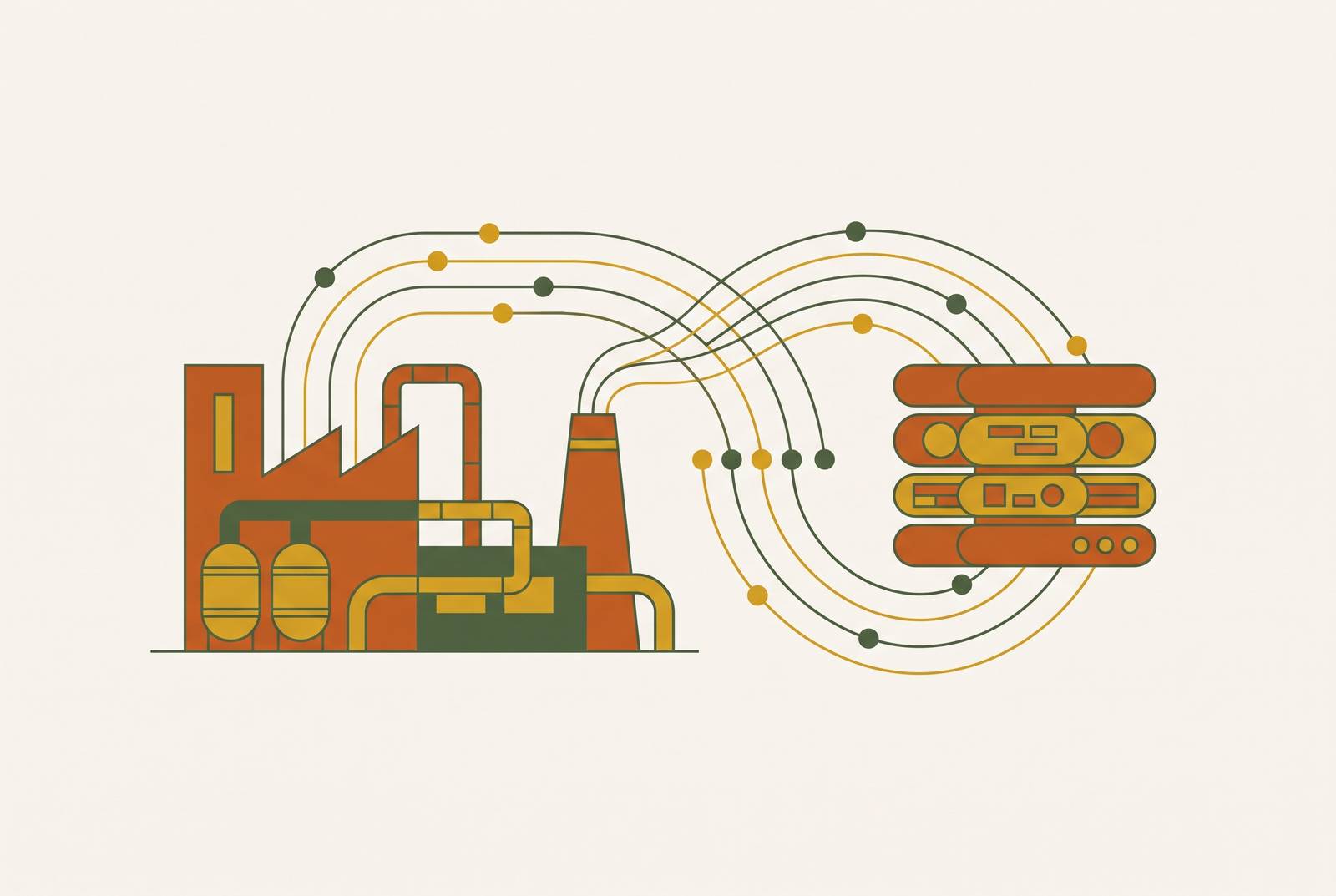
Salesforce enrichment, as most industrial teams practice it, fixes the wrong layer of the record. It fills in company name, headcount, revenue band, and headquarters location, which describes a corporate entity well enough, but says nothing about what actually happens on a plant floor. For a rep selling specialty chemicals, coatings, metalworking fluids, or water treatment programs, that gap is the whole problem: these products get bought at the facility level, driven by process type, machine mix, and shift volume, not by anything sitting in a corporate firmographic field.
Poor CRM data already carries a well-documented cost. Stale and incomplete Salesforce records are estimated to cost businesses $700 billion a year. But for industrial sellers, the issue isn't just decay, records going stale after a plant closes or a contact changes jobs. The category of data itself is wrong. A NAICS code tells you what a company does in aggregate. It does not tell you what a specific plant makes, what equipment sits on that floor, or what consumables get ordered every month to keep it running. A rep selling metalworking fluids needs to know whether a plant runs CNC machining, grinding, stamping, or forming before the first call is worth making, and firmographic fields simply don't carry that information. So reps fill the gap themselves: calling distributors, digging through trade directories, reading permit filings, doing by hand the work that should already sit in the CRM before anyone picks up the phone.
What plant-level data actually contains and where it comes from
Plant-level data isn't one feed you buy and plug in. It gets built from several distinct source types, each covering a different slice of what a facility actually does.
The foundation is production reality: what the plant makes, in what volume, using what processes. Layered on top of that is equipment and process data, since the machine types running on a floor point directly to specific fluid chemistries, viscosity grades, and maintenance schedules. A grinding line and a stamping line don't buy the same things, and knowing which one you're dealing with changes the entire sales conversation.
Regulatory filings turn out to be one of the richest, and most overlooked, commercial intelligence sources available. The EPA's Toxics Release Inventory requires facilities to report the chemicals they manufacture, process, and release as waste, which means a TRI report can reveal the exact chemical classes a given plant handles. That's a genuine prospecting signal for anyone selling specialty chemicals. TRI reporting covers facilities under SIC codes 20 through 39 (the core of manufacturing), plus metal mining, coal mining, power generation, hazardous waste treatment, and chemical production, a footprint that lines up closely with the industrial verticals where fluid and chemical sellers already operate. The TRI chemical list itself covers 810 individually listed chemicals and 34 chemical categories, so a facility's TRI filing effectively maps its process chemistry in detail. OSHA inspection records add another layer, surfacing the types of hazards and processes present at a site, useful for spotting need signals around industrial hygiene products, lubricants, and safety-related fluids. And the EPA's Facility Registry Service allows for downloadable facility identification and location reports, giving sellers actual plant addresses instead of a corporate mailing address three states away.
Industry classification codes act as rough process proxies, and they're worth understanding even though they have real limits. NAICS sectors 31 through 33 cover all of manufacturing, but the sub-codes underneath them signal genuinely different process requirements. Within fabricated metals alone, SIC sub-codes split out a range of distinct process types, each implying a different conversation about fluids and chemicals. A plastics company under SIC 308 needs a different pitch than a steel foundry under SIC 332, which needs a different pitch again than a medical instrument maker under SIC 384. Classification codes are still proxies. They need to get cross-checked against equipment lists, website language, and buyer intent signals before a record gets routed to a rep, because a code alone can mislead as easily as it can inform.
Commercial facility databases built specifically for industrial prospecting take a different approach entirely: they profile plants from the ground up, capturing what each facility makes and what equipment it runs, rather than inheriting a corporate firmographic record and hoping it's close enough. Environmental footprint data and real-time activity signals round the picture out. Production changes, capacity additions, new permit filings, these are the kind of operational signals that tell a seller when a plant's purchasing needs are actually shifting, in a way a static firmographic snapshot never will.
How Salesforce's data model handles, and mishandles, multi-plant accounts
Standard Salesforce architecture puts one account record per company, with contacts, opportunities, and activity history all hanging off that single record. Manufacturing doesn't work that way. A single corporate customer, an automotive Tier 1 supplier, a food and beverage producer, a specialty chemical company, can run multiple plants across different locations, each with its own purchasing authority, its own process mix, and its own product requirements.
Collapsing all of that into one account record creates two failure modes that show up constantly in industrial sales. First, coverage gaps: a rep who wins business at one plant assumes that win covers the whole company and never bothers pursuing the other facilities. Second, cross-sell blindness: a product sold successfully to Plant A never gets surfaced as an opportunity at Plant B, even when both plants run identical processes and would need the exact same fluid or chemical program.
Salesforce's own manufacturing positioning acknowledges the underlying issue, emphasizing that manufacturers need customer, product, and asset data unified in a single managed system. But that kind of integration only works if the plant-level layer exists in the first place to receive it. The structural fix is straightforward, even if it takes real setup work: each plant should exist as its own record, typically a child account or a custom facility object, carrying its own process profile, equipment data, product history, and contact hierarchy. Skip that step, and enrichment just adds better firmographics to a record that still describes the wrong entity, the holding company, instead of the building where the purchasing decision actually gets made.
The buying committee complexity makes this worse, not better. Plant management, maintenance and reliability engineering, purchasing, quality and EHS, and sometimes R&D all weigh in on process chemical and fluid decisions, and every one of those stakeholders is tied to a specific plant, not to the corporate parent three levels up in the account hierarchy.
The enrichment data types that actually move the needle for industrial sales teams
Standard enrichment vendors sell a familiar bundle: contact data, firmographic data, technographic data, intent data. Each has a role, but their value to an industrial seller varies a lot more than the marketing suggests.
Contact data, verified email, direct phone, title, seniority, is necessary but nowhere near sufficient. Knowing the plant manager's name doesn't tell a rep what the plant actually makes. Firmographic data, headcount, revenue, HQ location, ownership structure, carries surprisingly low signal for this audience: a private equity-backed metal fabricator with 400 employees could be a single plant or a network of twelve, and the firmographic record alone won't tell you which. Technographic data matters far more for software sellers than for chemical or fluid sellers, since a plant's tech stack says nothing about its process chemistry. Intent data, the behavioral and research-activity signals, helps with timing outreach, but only once the underlying account profile is accurate. Timing a call well against a record that describes the wrong entity doesn't help much.
The categories that actually matter for industrial sellers look different. Plant location data, real facility addresses rather than a headquarters three states away, lets a team map territory by production density instead of by where the corporate office happens to sit. Production process data, what a plant makes and how, is the basis for matching a product portfolio to what a given facility actually needs. Equipment and machine type data, specific to the plant floor, points directly to which fluid categories, chemistries, and maintenance cycles apply. Production volume and capacity signals hint at purchasing scale and how often a plant reorders. Environmental and regulatory profile data, TRI filings, OSHA inspection history, permit activity, signals chemical handling needs and compliance pressure all at once. And installed-product and competitive-displacement data shows which plants already buy from a given seller, which buy from a competitor, and which run processes the seller's portfolio covers but has simply never approached.
Once a plant record carries this kind of enrichment, it should tell a rep what the facility makes, what processes it runs, which product categories are relevant, who the stakeholders are, and what needs to get said in the first conversation to sound credible rather than like a cold-caller working from a purchased list. Direct sales remains the dominant channel in specialty chemicals, the largest share of the global specialty chemicals market by sales channel in 2025, which makes plant-level account intelligence the primary lever a seller actually controls, well ahead of marketing automation or partner programs.
The enrichment tools available in 2025 and how they map to industrial use cases
Three broad approaches to Salesforce enrichment exist right now, and each carries different trade-offs for an industrial team.
Single-provider platforms sit at one end of the market, offering broad contact and firmographic coverage across hundreds of millions of contacts and more than a hundred million companies. Coverage tends to run deepest for corporate entities and knowledge-worker contacts, and considerably thinner on plant-specific operational data, process types, and facility-level production profiles. For an industrial seller, this kind of platform earns its keep on contact enrichment, reaching the right stakeholders at a given facility, but it does much less for process-level qualification. Pricing on the higher end of this category can run into the five figures annually for a small team, with more accessible entry points available further down market.
Waterfall or multi-provider platforms take a different approach, connecting several data sources and querying them in sequence, so if one provider lacks coverage on a given facility, another might catch it. That approach helps teams whose accounts span diverse industries or geographies where no single database dominates. The trade-off is dependency on the aggregator's own data partnerships, and these platforms still lean primarily toward contact and firmographic data rather than plant-level production profiles.
Specialist industrial intelligence platforms represent a genuinely different category. Built specifically for manufacturing sales, indexing hundreds of thousands of plants and capturing process data, equipment profiles, production volumes, environmental footprints, and activity signals, these tools construct data from the plant up rather than inheriting it from a corporate firmographic record and hoping it fits.
Enrichment also creates its own data quality problem: as records flow in from multiple providers, duplicate accounts pile up, information conflicts, and formatting turns inconsistent. Data quality and governance tools address this by orchestrating enrichment across providers while running deduplication, standardization, and matching in the background to keep the CRM trustworthy. For a team enriching at the plant level, this governance layer matters even more than usual, since a corporate account and its twelve subsidiary plants need to stay correctly linked, not merged into one record or duplicated twelve times over.
Salesforce's own native options, Data Cloud enrichments pull from unified profiles into standard objects for enterprise-tier customers, at extra cost. These tools are built to unify data an organization already holds, not to source new external data from outside. Data.com, Salesforce's old data product, is retired with no direct native replacement. Most industrial teams end up needing a third-party tool regardless of which Salesforce tier they sit on.
The implementation pattern that tends to work combines real-time enrichment on new inbound records, so a plant contact created today carries full process context immediately, with batch enrichment that periodically refreshes the existing account base. Done well, this kind of setup can save over 20 hours a month per rep, time that would otherwise go into manual plant research that has nothing to do with actually selling.
How plant-level CRM data changes territory planning for industrial sales teams
Most industrial sales territories still get built on geography, states, zip codes, regions, or on named accounts, and both approaches rest on HQ locations and company counts rather than on where production actually happens.
That mismatch distorts territory planning in a specific and fairly predictable way. A rep assigned "the Southeast" might find that the bulk of their addressable plant volume sits concentrated along a single industrial corridor, rather than spread evenly across the region the map suggests. Plant-level territory planning replaces that geographic guesswork with production density: how many facilities of the relevant process type actually sit inside a territory, what their production volumes look like, what their purchasing scale suggests, and where competitive displacement potential is highest.
Territories built on real plant data eliminate two problems that show up constantly in industrial sales organizations. Overlap, where multiple reps contact the same facility's purchasing team with conflicting messages, and cherry-picking, where reps keep working the accounts they already know while high-potential plants sitting in the same territory go untouched. Industry-based territory assignment, grouping accounts by manufacturing sector rather than by geography, tends to work best when domain knowledge directly affects the buying decision, and in manufacturing, buyers generally expect a rep to already understand compliance requirements, operational constraints, and process-specific terminology before the conversation even starts.
Whitespace becomes visible at the territory level once plant records actually exist. A map of which facilities in a territory run relevant processes, overlaid against which of those are already customers, turns competitive displacement from a hunch into a structured, workable list. And because plant-level data can feed Salesforce continuously rather than through a quarterly import, territory plans can update as facilities open, expand, shift their process mix, or trigger new regulatory activity, instead of sitting stale between annual planning cycles.
Using enriched plant records to find cross-sell and upsell opportunities inside existing accounts
Most sales leaders, if asked directly, cannot say with any precision which plants inside a given customer account buy which product lines, which plants are buying from a competitor instead, and which plants run processes the seller has never even approached. That's the installed-base problem, and it sits at the center of most missed revenue in industrial accounts.
Over a long product lifecycle, the first sale to an account often represents only a small fraction of the account's total lifetime value. For specialty chemical sellers, the analog is volume expansion: repeat reorders, upgrades in concentration or grade, and extension into adjacent categories, rust preventives, cleaners, lubricating greases, sold outward from an initial base of cutting fluids.
Whitespace analysis at the plant level runs on a fairly simple mechanic. Map what each plant currently buys against the full product portfolio, building something like an account landscape matrix with facilities on one axis and product lines on the other. Filled cells represent existing revenue. Empty cells are candidates, but only the ones where the plant actually runs the process the product addresses are worth pursuing; an empty cell next to a process mismatch is just noise on the matrix, not an opportunity. Enriched plant data is what tells the difference between the two, and without it, that matrix is really just a spreadsheet of guesses dressed up as strategy.