HubSpot Enrichment Workflows That Pull Live Production Data From Chemical and Industrial Facilities
Plant-level data triggers qualification workflows that match actual purchasing behavior.

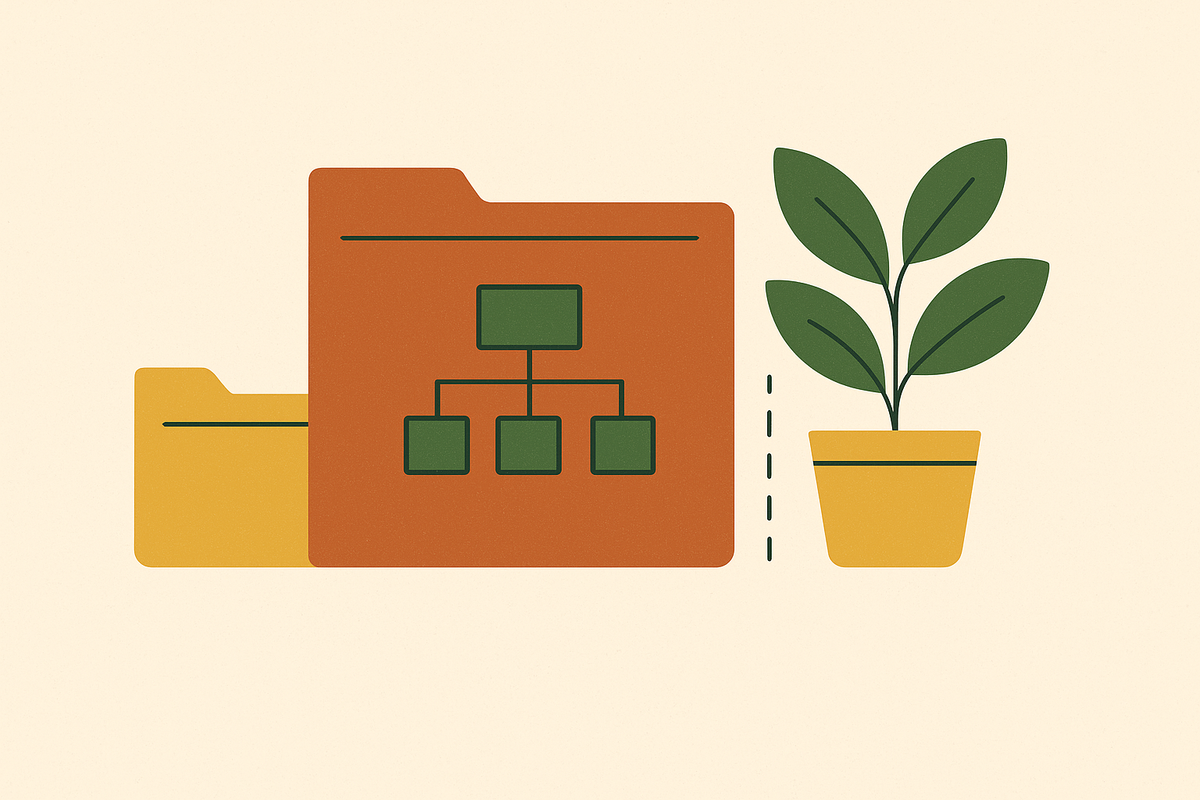
In HubSpot, external manufacturing plant data must populate facility properties through an API connection or data sync so that production, equipment, and consumption signals can trigger qualification, routing, and sales activation. The useful unit of industrial sales intelligence is the plant where purchasing needs arise.
Why standard HubSpot enrichment fails manufacturing sales teams
A rep enriches a large manufacturer and gets one company record, even though the business operates dozens of plants. Each location can have its own production manager, budget, equipment list, and purchasing cycle. The record hides those differences. Standard HubSpot enrichment appends corporate firmographics to company records, attaching information to the wrong level of the business.
In manufacturing, the decision about what fluids a machining line runs, what chemicals a coating process consumes, or what packaging a food line needs happens at the plant. The distinction between a facility running one shift or three changes equipment load, fluid consumption, and service frequency. Yet a corporate record gives the rep no reliable basis for making it. As a result, reps call the wrong contacts, miss local expansion signals, and qualify accounts against criteria that do not describe actual purchasing behavior.
What plant-level enrichment actually means and what data it requires
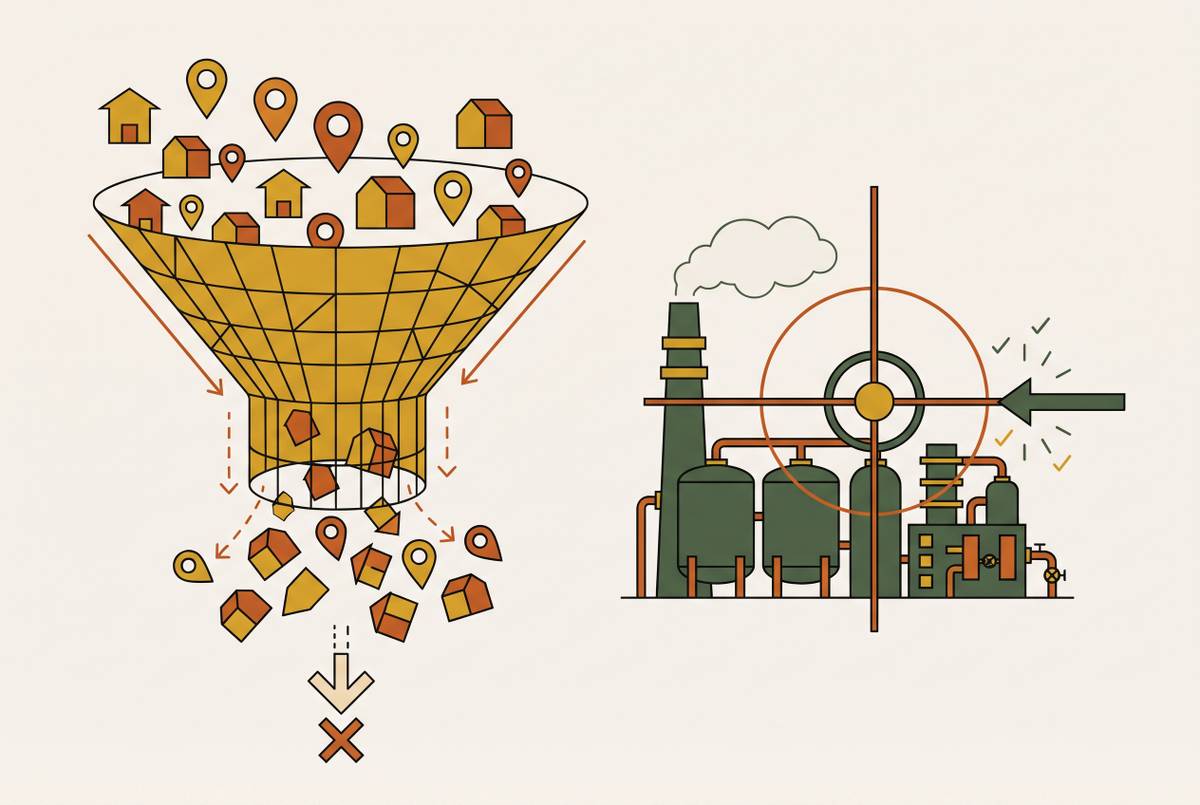
Plant-level enrichment treats each facility as a distinct CRM record populated with the operational attributes that drive purchasing at that location. Its identity includes a physical address and county, with SIC and NAICS codes resolved to the plant’s production activity. NAICS.com states that each establishment receives a code based on its own primary activity. Classification alone is still not enough, however. The record also needs plant-level headcount, shift patterns, production capacity indicators, environmental and regulatory certifications, and equipment and process technographics, including ERP, MES, and specific machinery lines.
A 40-person plant running one shift buys a fraction of the metalworking fluid, coolant, or specialty chemical consumed by a 400-person plant running three shifts. Parent-company headcount cannot reveal that difference. The data model must therefore keep the details of how each location runs, rather than copy corporate attributes into plant records. Otherwise, the CRM has more rows but tells the rep no more about demand.
Three enrichment motions populate this model at different points. Bulk CRM append cleans up facility records and adds to them before a campaign or territory review, while real-time API enrichment adds context when a new record enters HubSpot. Net-new list building creates records for facilities in unworked territory. These motions share the same structural requirement. HubSpot’s native enrichment uses contact and company records keyed by domain and cannot resolve individual facilities on its own, so plant data must come in through custom properties, custom objects, or API-connected external sources. HubSpot’s manufacturing page describes custom objects for facilities, warehouses, and equipment installations, providing a foundation separate from parent-company records.
How production data functions as a sales signal before a rep ever makes contact
A new facility announcement in a press release or permit filing signals more than another address for the CRM. A new plant concentrates capital purchasing decisions across equipment, chemicals, packaging, and services into a 12-to-24-month window. Production data then narrows the likely need. A plant making aluminum automotive components has requirements for metalworking fluids, coolant management, and surface treatment chemistry that a plant making plastic consumer goods does not share.
Knowing which line of CNC machining centers a facility runs helps a specialty chemical rep find compatible fluid families, service intervals, and the times when maintenance is likely to lead to reorders. The field becomes a proxy for purchasing conditions. Similarly, simultaneous hiring of ten or more operations, production, or warehouse roles can signal a new line, a new customer contract, or broader capacity expansion. Each could mean the plant will use more industrial inputs, though the hiring signal alone does not show which is the cause.
A capital expenditure increase disclosed in an earnings call or regulatory filing adds evidence of authorized investment in equipment and facilities. Unlike topic intent scores drawn from content consumption, these signals give the rep an event to point to. A rep can say, “I saw your Canton facility announced a capacity expansion last month” when that announcement is the source of the signal. The commercial value comes from connecting a referenceable event to the plant’s likely requirements.
The HubSpot workflow architecture that turns facility data into qualified pipeline
Once production data lives in facility properties, field changes can enroll records into qualification workflows. Production process type, shift count, equipment class, or a signal flag from an external feed can each supply the trigger. Instead of waiting for another database import or manual review, the workflow responds when the operational context changes. Qualification, routing, and activation then use the same facility-level evidence.
For an implementable qualification sequence, the initial condition is a facility record created or updated with production process equal to the target process type. The next action gives that record a score based on ICP criteria, including shift count, equipment class, and geographic territory. If the score exceeds the threshold, the workflow creates an associated deal, assigns the territory rep, and enrolls the prospect in a sales sequence seeded with facility-specific context. If it falls below the threshold, the facility enters a nurture queue. Re-enrollment is tied to the next signal event, such as a new hire flag, capex signal, or leadership change, so an initial rejection does not become permanent exclusion.
Routing follows the plant’s location. That distinction puts the opportunity with the rep covering the facility’s geography and industrial base. HubSpot’s Run Agent Action in Workflows, available as of July 2026, also allows a Breeze AI agent to receive CRM inputs and return outputs to records or downstream steps. For industrial teams, the relevant use is research or summarization prompted by a facility signal change. Custom meeting auto-association rules also apply to meetings booked through scheduling pages or synced from external calendars, so site visits booked outside the CRM can show up in the right activity history.
Territory planning built on facility density rather than geography or gut feel
Consider a pump manufacturer’s CRM viewed by a rep covering Ohio. With headquarters-level records, the rep sees one global OEM in Chicago. With facility-level records, the same account resolves into multiple plants across several states, two of which are mid-expansion. Corporate location has obscured both the physical sales coverage required and the facilities where investment may create demand.
Plant-level firmographics support assignment, route planning, and capital-equipment sizing. Assignment establishes which rep owns each plant, while route planning determines the order of visits within a region. Sizing distinguishes facilities with larger consumption opportunities. For specialty chemical teams, this is a better basis for territory design than weighting every account equally regardless of its production activity. Production volume, process match, and expansion signals let sales leaders distribute pipeline potential.
A duplicate plant record can distort the territory’s apparent opportunity, while a plant contact assigned only to headquarters can break the link between local ownership and outreach. HubSpot custom objects and association labels allow teams to connect parent companies, facilities, and contacts without collapsing plant ownership into the corporate record. Deduplication and correct associations are therefore prerequisites to meaningful territory comparisons.
Using installed-base and consumption data to surface cross-sell and upsell inside existing accounts
A record with production activity, installed equipment, current purchases, and shift patterns can show what a facility needs without a rep having to research the account from scratch. Transaction history supplies the commercial context for interpreting those signals. Equipment nearing a standard service or replacement point can flag an upgrade conversation, while unusually high consumable use relative to production volume can indicate process inefficiency. Neither signal is merely a reason to sell more of the current product.
A plant may buy one product family while running a second process that the seller can also support. That gap stays hidden if the account record shows purchases but no details of production. In metalworking fluids, a facility that runs straight oils gives the rep a basis for talking about synthetic and semi-synthetic alternatives. Those fluid families are gaining wider acceptance because they provide better thermal control, improved resistance to bacterial growth, and longer sump life, connecting product attributes to a conversation about conversion, reduced downtime, and extended sump intervals.
The conversation needs to include people besides the original procurement buyer. Industrial buying committees span engineering, operations, quality, procurement, and finance, and a new product category can require approval from different functions. Facility-linked contacts make that distinction actionable for the account team. HubSpot workflows can respond to a transaction history update or service record field change by enrolling the facility in a cross-sell sequence, assigning a task to the account owner, and surfacing the product gap on the contact record. This replaces reliance on the rep remembering to inspect the account with a defined response to a specific change.
What a well-architected facility record looks like in practice and how to build toward it
A complete facility record is a custom object or company record linked to its parent company and the contacts working at that plant. It holds the address and county, production process, plant-level SIC and NAICS codes, shift count, key equipment and technology classes, and relevant environmental certifications. Current products purchased and their volumes connect operations to revenue. A signal field updates when an expansion announcement, hiring surge, capex disclosure, or leadership change is detected. Together, these fields describe the operating site and the event that makes it commercially timely.
The implementation path begins with an audit of existing records. Sales operations should find multi-plant parent accounts that need separate facility records and flag contacts who are assigned to headquarters but belong at a plant. Next comes the facility data model. Custom objects or extended company properties hold the plant attributes, and association labels show how parents and contacts are linked to facilities. This sequence establishes where the data belongs before ingestion begins.
With that structure in place, the next step is to connect an external manufacturing plant database through an API or Operations Hub data sync. The connection populates production process, equipment, and capacity fields at the facility level. This is where structure becomes operational intelligence. Field-change triggers can then start qualification, routing, and cross-sell workflows when production data changes or signal events come in. HubSpot’s July 2026 object-agnostic triggers allow actions to cascade across parent company, facility, contact, and deal records from a single trigger point.
The final implementation step is to validate territory assignments against the enriched facility records and correct cases where plant location differs from headquarters. That check tests whether the new model changes ownership as intended. The practical acceptance test is equally direct for sales. A rep receiving a facility lead should see what the plant makes, which process it runs, which signal triggered enrollment, and the recommended next action on the record itself, without opening a second browser tab.