Building Facility Profiles That Reflect Current Production Reality Inside Your CRM
Plant-level CRM records route sales efforts to the right contacts and opportunities.
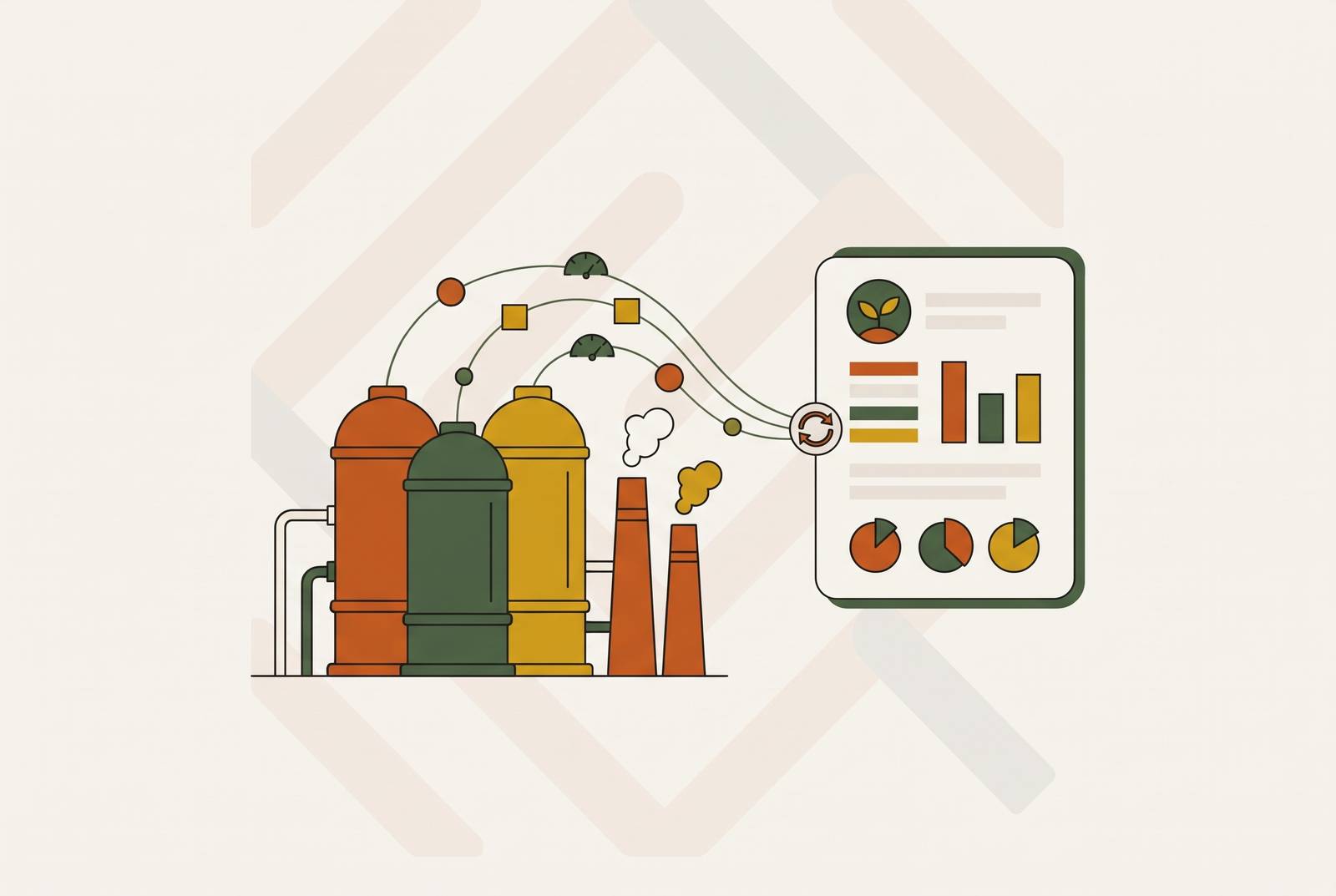
Each facility profile must connect current production, equipment, buying contacts, and installed-base data to the CRM’s commercial records. The decisive work is structuring and maintaining those connections so that enrichment improves sales decisions rather than adding fields to an account that still describes the wrong unit of business.
Why CRM records built on company-level data fail manufacturing sales teams
A typical CRM record holds a name, title, phone number, and deal stage. A manufacturing sales representative needs to know what a plant makes, what equipment it runs, and what those operations require it to buy. These are different kinds of knowledge. Contact fields help a rep reach someone, but they do not establish whether that person owns the relevant process or purchasing decision. A record can therefore be complete by the CRM’s standards and still provide little basis for a useful sales conversation.
The mismatch begins with the account itself. A manufacturer with multiple sites has distinct processes, equipment, buying contacts, and purchasing authority at each plant. Collapsing those sites into a single parent record removes the distinctions that routing, timing, and messaging depend on. The practical failure is a rep approaching the wrong contact at the wrong site with a pitch intended for another application.
Record decay makes that mismatch harder to detect. Job changes, company restructuring, and stale manual entries continuously weaken the link between the record and the business it describes. Multi-site accounts have more moving parts, so there are more opportunities for those details to diverge. A contact may remain associated with the corporate account even when the site-level relationship is no longer current. Without plant-level signals, the rep has little basis for distinguishing an active commercial relationship from an obsolete entry.
What a production-reality facility profile actually contains
A useful facility profile starts with the physical plant and places operational data on top of firmographics. Identity comes first because matching depends on it. Legal name and website domain provide matching keys between CRM and ERP records and help resolve duplicates. The parent company and corporate hierarchy show who owns the account and who has buying authority across sites. A physical plant address distinct from headquarters, together with its function as manufacturing, distribution, or R&D, establishes which commercial conversation belongs there.
The operational layer explains what the plant needs. Product lines, process types, and materials handled connect production to purchasing requirements, while specific machinery, process technologies, and line configurations narrow the application. In metalworking fluids, knowing what a plant cuts, grinds, or forms indicates the class of fluid it needs. Capacity and utilization signals add urgency because a plant running hotter consumes inputs faster and has less tolerance for supply disruption. Documented OSHA history, sustainability reporting requirements, and pressure to replace older formulations provide grounds for compliance-led conversations.
The relationship layer identifies who can act on those needs. Purchasing, engineering, quality, and plant operations management belong to a site-level buying committee because their concerns and authority differ. For channel-managed accounts, the distributor serving the plant also belongs in the profile, since the rep’s leverage runs through that partner. The installed-base layer then links the equipment, its serial numbers, and its service history to opportunity records. These details expose renewal and retrofit opportunities without making the account manager wait for an inbound RFQ.
Each layer answers a different commercial question. Identity establishes which facility the data describes, operations establish application fit, relationships establish the route to a decision, and the installed base establishes what can be extended or renewed. Firmographics remain useful within that structure. They are the foundation.
How should Salesforce and HubSpot records be structured for plant-level enrichment?
The CRM schema must use a parent-child account hierarchy to keep the corporate parent separate from each operating plant. Opportunities, site-level contacts, and installed equipment must link to the child plant record. Otherwise, even accurate enrichment has nowhere precise to attach. A manufacturer operating a dozen facilities across three states needs those locations differentiated because its processes, contacts, and buying patterns are not interchangeable. Without that distinction, territory assignment and contact routing fall back to the company level.
The relevant criterion is whether the implementation can preserve the relationship between a physical facility and its commercial records. Asset relationships are equally important to that design. Opportunities need connections to physical machine assets, plant installations, and serial numbers so that installed-base selling does not depend on a rep’s recollection. Adding equipment descriptions to a parent account does not provide the same precision.
Pipeline structure must also reflect the buying process. Engineering review, sample qualification, trial run, and contract negotiation are manufacturing decisions that can get lost in a generic four-stage funnel. A buying cycle spanning many months, multiple stakeholders, and technical sign-offs cannot be represented adequately by stages designed for a 30-day close. The schema therefore has to hold both the production context and the progress of technical acceptance.
ERP integration fills in the commercial picture while keeping the facility hierarchy in place. Bidirectional integration lets quotes use inventory, pricing, and lead times and sends order history and contract volumes back to the account record. Salesforce Manufacturing Cloud does this through Sales Agreements, which compares planned quantities and revenue with actuals from the linked orders and contracts. That comparison connects an agreement to purchasing activity rather than leaving performance isolated in the back-office system.
Why territory and coverage decisions made on generic records systematically misallocate field time
When facility records lack production data, territory design defaults to geography and headcount. Those proxies describe location and scale, but not the applications a supplier can serve or the attention each plant warrants. The strongest rep may concentrate on established customers who already buy. Meanwhile, a colleague has hundreds of accounts with no revenue and no last contact, and no one is clearly responsible for nearby plants of affiliated suppliers.
Industry structure compounds the error across a portfolio. Fabricated metal products offers the largest account universe by possible plant locations, but average plant size by headcount is small. Transportation equipment has far fewer locations, but its plants are much larger. Applying the same call frequency, rep coverage, and quota structure to both substitutes a uniform administrative rule for the differences in the manufacturing base.
Plant-level profiles make those differences available to territory planning. Production processes, equipment, and buying authority help show an account’s potential in ways that headquarters headcount alone cannot. Knowing which plants are close together helps with coverage, but it does not show whether a field visit is worth making for the business. The relevant unit is the plant and its fit with the supplier’s offering.
Accounts may warrant a move from active field coverage to inside sales or partner nurturing, creating predictable internal resistance. The discomfort reflects the fact that coverage decisions redistribute attention and responsibility, which is precisely what a more accurate territory model is meant to do.
How plant-level facility records make cross-sell and upsell systematic rather than opportunistic
Within existing accounts, the obstacle shifts from allocating coverage to recognizing opportunities already present in the installed base. Equipment and service information is typically scattered across CRM, ERP, service ticketing, spreadsheets, and the memory of long-tenured employees. A retrofit, renewal, or adjacent application may be visible only to the person who happens to remember the installation. Consolidating that information under the facility makes it available to the team responsible for account growth.
Equipment identifies the application, service history informs the conversation, and purchasing history shows the existing relationship. Production changes and process certifications offer more clues about where another product may fit. Regulatory pressure can also open an adjacent application through a compliance-led discussion about something the plant already buys.
Quaker Houghton describes QH FLUID INTELLIGENCE™ as a platform that “enables our customers to Measure, Control, and Optimize their production processes”. Its e-Mobility offering is for EV battery cans, e-motors, and structural components. Those are distinct production applications. A facility record that names the process used at the plant helps account managers link such offerings to a relationship they already have.
The opportunity depends on maintaining the connection over time. A profile that reflects what the plant makes, runs, holds certifications for, and has bought can reveal changes before the next quarterly call. Cross-selling can then draw on evidence linked to the facility, with less need to rely on what one person remembers. That is how the same data discipline used to prioritize prospects also supports aftermarket penetration and expansion within established accounts.
Why data quality governance is what separates enrichment from noise amplification
Automated enrichment introduces a substantial risk when the underlying records are unreliable. It can spread errors faster than manual work, carrying wrong plant data into territory assignments, opportunity routing, and forecast inputs. Confidently wrong records also erode rep trust faster than records that acknowledge a gap. More fields do not solve that problem. Governance is the mechanism that makes enrichment usable.
Before enrichment starts, the team setting it up must decide which system owns each field. CRM and ERP cannot both act as the source of truth for the same value without a conflict resolution rule. The team must also clean the records before automating processes that depend on them. Matching, deduplication, and correct parent-child relationships establish the foundation for subsequent updates. AI agents and enrichment tools cannot substitute for that preparation when they operate on untrustworthy records.
Once enrichment runs, maintenance needs defined review triggers. Plants change operations, certifications lapse, equipment turns over, and contacts move. Each kind of change can weaken a different part of the facility profile. Review therefore has to address the operational and relationship layers as well as basic identity fields. Even when a plant is correctly matched, the description of what it produces can be out of date.
Signal selection requires the same discipline as field ownership. Most generic B2B intent signals were built around software and technology buyers consuming digital content, while manufacturing buying signals are often physical and public. Plant expansions, new program awards, and contract announcements indicate changes that company-level intent scores are mostly blind to. The test for enrichment is therefore not simply whether a signal is recent. It is whether the signal describes a relevant change in the facility’s production or purchasing context.
What a maintained facility profile enables that a static CRM record cannot
Territory plans can reflect manufacturing density and plant-level potential instead of headquarters headcount or geography alone. Account growth can respond to production changes rather than depend on a rep remembering to ask about them. Forecasts can draw on real account activity and contract volumes rather than deal stages defined only by sales activity. These are different uses of the same connected record.
Maintenance also changes what a first conversation can accomplish. A rep who already knows what the plant makes and runs can begin with the relevant application rather than use the call to reconstruct basic production facts. That preparation supports first-contact credibility without removing the need for discovery. The conversation can focus on the plant’s needs rather than first establishing whether the supplier has reached the right site.
A static record cannot provide that continuity as operations and relationships change. Its usefulness declines even when every original entry was accurate, because the production environment does not remain fixed. Keeping a profile up to date keeps the plant, its assets, its buying relationships, and its commercial activity linked as those details change. The result must support a defensible next action at a specific facility.