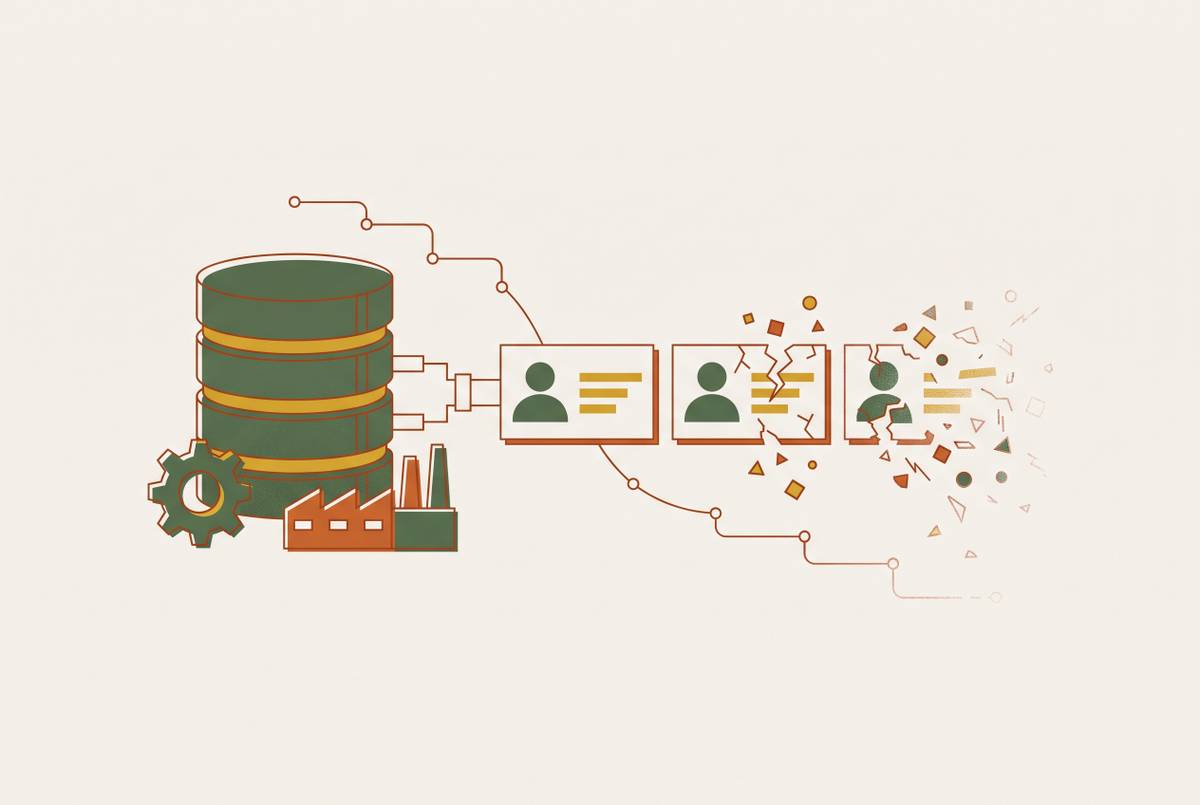
Mapping Installed Equipment and Chemical Consumable Demand Inside a Single Plant Profile
Equipment profiles reveal which chemicals a plant needs and how fast it consumes them.
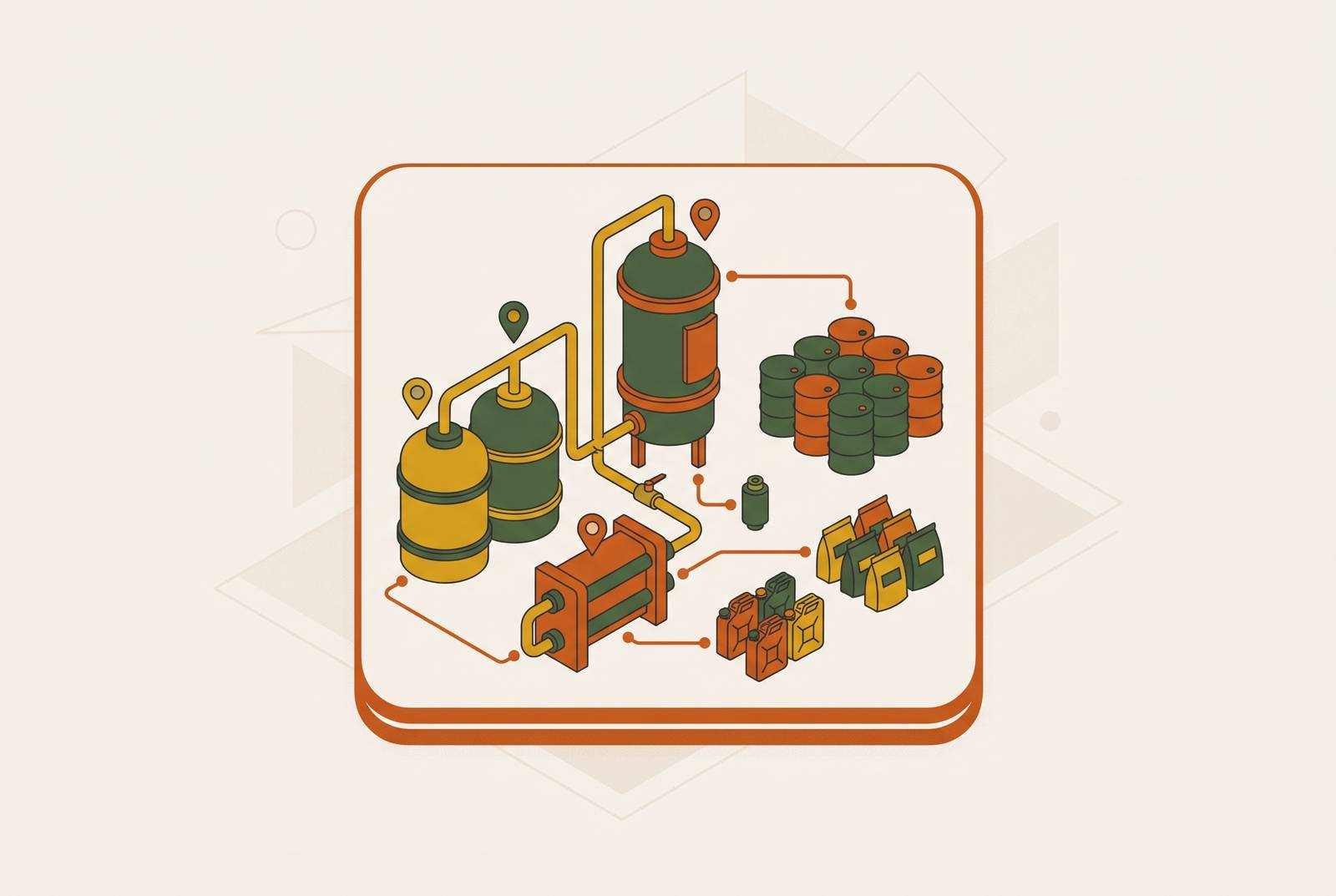
Plant-level manufacturing intelligence for industrial sales teams connects a facility’s installed equipment, production processes, materials, operating intensity, and recent activity to the products it buys. For chemical consumable sellers, a complete plant profile is a demand map. It reveals which chemistries a facility needs, how intensively it is likely to consume them, and which operational changes justify a sales conversation before the first call.
Why equipment categories are the right unit of analysis for predicting chemical consumable demand
Manufacturing plants buy chemicals because of what their equipment does. A CNC machining center creates a recurring need for machining fluids, while a heat exchanger creates demand tied to the process it serves. That demand repeats as long as the equipment runs. The installed equipment is therefore the starting point for predicting consumable requirements.
A corporate address, headcount band, or revenue tier describes an organization without identifying the machines operating inside a particular facility. It also leaves out the materials those machines process and the intensity of their use. Those omissions are commercially significant because buying happens at the plant, where managers, budgets, and production lines can differ within the same parent firm.
Equipment categories give sellers a practical unit of analysis. They connect an identifiable production asset to a recurring chemical requirement rather than treating an industry classification as evidence of product fit. The resulting inference has a clear boundary. A seller can establish the likely demand category before contacting procurement, while process and material information sharpen the specification.
How the chemical processing equipment landscape defines which consumable categories matter most
The equipment landscape becomes manageable when categories are read as different sources of chemical demand. Machining equipment points toward fluids required by cutting, milling, grinding, and boring operations. For heat exchangers, treatment needs depend on the process environment. Reactors and surface-coating lines have further needs tied to their processes that an account record focused on machining would miss.
Within machining, the category must be narrow enough to distinguish the operation. A grinding line and a CNC machining center both indicate metalworking-fluid demand, but they do not imply the same fluid specification. Boring and deep-hole drilling have different needs again. Grouping all three under “manufacturing equipment” would discard the detail that makes the record useful for product matching.
Heat exchangers show why the equipment map also needs a second layer. The category identifies where to investigate chemical demand, but requirements vary by production process, from food-grade descaling and sanitizing chemistry to industrial corrosion and fouling treatment. For reactors too, sellers need to know the process before they can recommend a specific product.
For a seller, this structure separates three questions that broad account data leaves entangled. The equipment installed shows what kind of demand is likely. What the equipment does and which materials it processes determine the appropriate chemistry. How intensively it operates helps establish consumption velocity. A useful plant profile preserves those distinctions rather than compressing them into a general description of the business.
Reading the metalworking floor: what machining equipment reveals about fluid demand before you call
CNC machining and milling indicate demand for water-miscible cutting fluids, including emulsifiable or semi-synthetic formulations matched to the material being cut. A profile identifying multi-axis CNC machining centers therefore establishes more than general interest in industrial chemicals. It gives the seller a defined fluid category to qualify. The next question concerns material compatibility.
Grinding operations point to a different specification. Grinding fluids must be optimized for chip evacuation and surface finish, so an existing cutting-fluid relationship does not establish that the grinding requirement is covered. The equipment record makes that distinction visible before the call and gives the conversation a specific technical purpose.
Boring and deep-hole drilling signal demand for high-pressure coolant systems and fluids with strong boundary lubrication characteristics. These operations cannot be treated as interchangeable with milling simply because both remove metal. The operation defines the initial requirement. Material information then narrows the product fit, especially where stainless steel or difficult-to-machine alloys such as Inconel are involved.
Master Fluid Solutions anchored the October 2025 launch of TRIM MicroSol 689NXT explicitly to stainless steel and Inconel applications. The launch illustrates how a material field can turn an equipment-based inference into a commercially relevant product discussion. Production intensity adds another dimension. A three-shift plant loads equipment harder, replaces consumables faster, and buys more fluid than a single-shift site. Shift patterns therefore provide a consumption-velocity proxy that helps rank otherwise comparable accounts by urgency.
How production process context sharpens equipment-based inferences beyond fluid type
A heat exchanger fleet at a food-and-beverage plant demands food-grade descaling and sanitizing chemistries. The same equipment category at a petrochemical plant demands industrial-grade corrosion inhibitors and anti-fouling treatments. The equipment category alone cannot distinguish these needs.
That distinction applies to metalworking as well. A CNC machining center identifies an operation, but the material being cut determines which formulations deserve consideration. Shift patterns then help distinguish the likely pace of consumption. Two facilities with similar equipment can therefore represent different opportunities because their materials and production intensity differ. Equipment count is not a substitute for either field.
Semiconductor production provides a further illustration of the limits of counting assets. A fab transitioning to advanced nodes can have structurally higher polishing-consumable demand than its equipment count alone suggests. The process transition changes how the installed base should be interpreted. Although this is a different application from metalworking or coatings, the analytical principle is the same.
A plant running AI-driven reactors or digital-twin-enabled process lines is tracking consumable performance data and calls for suppliers able to engage with that information. Equipment type, production process, material inputs, and automation level belong together in the plant record. Together, these fields support a product recommendation grounded in the application before the first conversation, rather than a generic offer based on the company’s sector.
What the equipment map reveals about cross-sell and upsell demand that company-level data hides
A facility with CNC machining, a heat exchanger circuit, and a surface-coating line contains three distinct chemical demand streams. Each has its own qualified product, buying cycle, and technical contact. A company-level CRM relationship can conceal those differences. Recording the customer as a single chemical account makes it difficult to see which applications the supplier serves and which remain outside the relationship.
The pump manufacturer example in the brief illustrates the structural problem. A global OEM listed as a single CRM record in Chicago became 11 plant-level records across five states after enrichment. Two of those plants were mid-expansion and had been ignored entirely.
Separating the plants made it possible to distinguish existing coverage from overlooked facilities and to recognize expansion as a reason for a timely conversation. Equipment mapping takes that distinction further inside each site. It separates the demand associated with machining from the requirements of heat exchange or surface coating, so account growth can follow actual applications.
This makes cross-sell a consequence of understanding the facility. It also grounds any upsell discussion in the process and materials, since a higher-value formulation must fit both. The buyer’s perspective reinforces that logic. Plants rationalizing operational complexity to maintain repeatability as product mix changes seek suppliers who understand their processes. A correctly read equipment map demonstrates that understanding through relevant application knowledge.
Why physical buying signals from plant-level activity outperform intent data for triggering consumable sales plays
Process understanding establishes product relevance, but it does not by itself establish timing. Internal ERP signals are another useful way to know when to sell consumables. Those signals are valuable to the incumbent supplier that already serves the account. A challenger cannot count on seeing the internal purchasing information that a supplier with an existing relationship can access.
Equipment expansions, new production lines, shift changes, and facility upgrades reflect production decisions. A facility mid-expansion is a sign that new equipment is being installed. A move from single- to multi-shift production changes the consumption-velocity inference, while a new line for a different material creates a reason to revisit formulation requirements.
Topic-based intent data answers a different question. It identifies content consumption associated with a company, but it does not establish which facility is changing or which operation creates the chemical need. A plant-level event connects timing to an application. An equipment retrofit toward smarter systems, for example, gives a seller a process-specific reason to discuss consumable performance.
Physical signals expose operational changes externally and give another supplier access to timing that would otherwise remain difficult to infer. The lesson for sales teams is to connect each event to the equipment and process already recorded. An expansion becomes a qualified consumable sales trigger when the profile shows what is expanding and which chemistry that operation requires.
What better data tells industrial sales reps about what a plant produces and buys
A complete plant profile combines equipment categories, production process, material inputs, automation level, shift patterns, and current activity signals in one facility record. Company firmographics describe the company, topic intent shows what content people consume, and equipment data shows which production assets it has. The combined plant record links which products fit, how heavily they are used, and a reason to act.
That connection changes territory design. Manufacturing density and equipment profiles allow sellers to prioritize facilities whose operations match their product portfolio. Proximity alone does not establish demand. Building a territory around installed equipment that needs those products gives sellers a reason for each call, while shift patterns and activity signals help show which of those plants to call first.
Pipeline generation becomes more selective for the same reason. Rather than call every manufacturer in a zip code, a representative can focus on plants whose equipment and processes suggest a need for the chemistries being sold. Existing accounts benefit from the same structure. Separate demand streams create specific growth opportunities, while a plant-level CRM record preserves the operational detail needed to pursue them.
The American Chemistry Council’s mid-year 2026 outlook expects specialty chemical output to fall 0.3% in 2026. That uneven outlook strengthens the case for locating expanding operations rather than treating every manufacturer as an equivalent prospect. Precision begins with a practical standard for the record. Without a discovery call, it should answer what the plant makes, what equipment it runs, what materials it processes, how intensively it operates, and what has changed recently. Every unanswered field leaves a gap between a company on a call list and a qualified chemical consumable opportunity.